


Interview with Marek Mikolajczyk, CEO of Wallstein Rothemühle
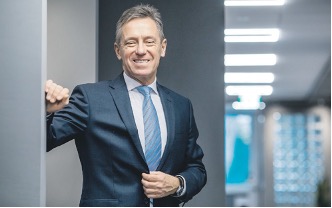
CLEAN AIR: “Most Polish power plants and combined heat and power plants are equipped with our electric filters. Annually, these filters prevent tens of thousands of tons of dust from being emitted into the air”,says Marek Mikolajczyk, CEO of Wallstein Rothemühle.
Known until recently as Balcke-Dürr Polska and now as Wallstein Rothemühle, the company is serving most power plants, combined heat and power plants and many other industrial facilities both in Poland and abroad. Annually, their electric filters prevent tens of thousands of tons of dust from polluting the air. They are familiar with world class dust collection technologies. They are upgrading the equipment of their competitors and making it more efficient. They have a busy time now: in 2021 the European Union is introducing more stringent standards that include obligatory removal of pollutants – including dust – from flue gases.
You have been well-known in your industry for many years, but this year you changed the name...
Rothemühle electric filters have been installed in Poland since the 1990’s. Our company was established in 2004 under the name Balcke-Dürr Polska as part of the American conglomerate SPX Inc. This year there was a change in the ownership and therefore the company’s name also changed. At the moment we continue our operation within the Wallstein Group like before. The Group specializes in construction, delivery, installation and commissioning of electric filters and heat exchangers. Most components of this equipment are produced by our partners in Poland. Electric filters are devices that have been long used by power plants, combined heat and power plants and other industrial facilities in fuel combustion processes to keep the air clean by removing dust from the flue gases. Rotary heat exchangers help recover heat from combustion processes involving different kinds of fuel. Most Polish power plants and combined heat and power plants are equipped with our electric filters. These filters help keep the air clean. What’s the impact? Tens of thousands of tons of dust removed. Our customers are both state-owned and private enterprises including PGE GiEK, Enea, PGE Energia Ciep?a, PKN Orlen, International Paper, Mondi, Termika, Tauron, ZE PAK, Ciech and Veolia.
Do you supply your own equipment only?
Since 2020 we have been the owners of the de-dusting technology, including the patent for the Rothemühle electric filter. We bought it from the German parent company so today the technology and all the relevant patents belong to us. We also own a unique database comprising over 2,500 Rothemühle electric filters installed over the years all around the world. Ever since the establishment of our company, this technology has been developed and enhanced based on the solutions designed by our engineers to eventually reach the record efficiency level in de-dusting. Here are several examples of relevant projects we are currently implementing in Poland: upgrade of three electric filters at the Turow Power Plant, four electric filters at the Opole Power Plant and the upgrade of 12 electric filters manufactured by other companies at the CHP plants in Krakow, Wroclaw, Gdynia and Gdansk. We supply primarily our own equipment but a really large share of our business is focused on improving the dust collection efficiency of equipment produced by other suppliers. Imagine, for example, if Mercedes was not only supplying its own cars but also enhancing the performance of Volvo cars. Our solutions are quite popular in the market.
If the smoke coming out of a power plant’s stack is clear, does it mean the plant is equipped with your filters?
Very often that’s true. I come from Warsaw. For many years, I lived in the Stegny neighborhood and I would often find my car covered with black snow in winter. The reason was obvious: Stegny is located near the Siekierki Power Station and during the night, many kilograms of dust were falling down on the cars. Today this situation is completely different: after joining the European Union, Poland has invested enormous resources into environmental protection. In Warsaw, this also involved our electric filters. The EU standards introduced in Poland, the obligation to conduct continuous measurements and the changes in the public awareness resulted in reduction of pollutant emissions, including combustion dust and other industrial processes. However, reduction of the so-called household emissions is still a big issue.
Are we breathing in a better air now?Definitely. Furthermore, in 2021 new standards will be introduced in the EU and therefore in Poland as well, prescribing a further reduction of pollutant emissions, including dust in flue gases (so called BAT conclusions). With the equipment that we offer these standards are achievable. Thanks to these new regulations, we are already engaged in several dozen projects involving upgrade of Polish plants.
Do you operate mostly in Poland?
In Poland we have about 60 employees, mostly engineers. I can proudly say that for many years our company has enjoyed a really low personnel turnover rate. Our employees have personally designed multiple solutions that make our equipment so unique. Thanks to the consistent development of our expert team, we have been able to gain a significant share in the Polish market and we want to leverage this advantage in our export activity in the coming years. Our electric filters are being installed outside Poland – in the Balkan Region, in Scandinavian countries, in France, Austria and Germany. Our company is one of the leading European suppliers. In spite of the pandemic, we have a pipeline of new projects and we are closing 2020 with high sales growth figures again. Next year the same trend should continue. I’m confident about the company’s future growth.
Published in partnership with Wallstein Rothemühle


